
In this article
Quick takeaways
- Clear leave policies and good communication prior to the World Cup will help you avoid last-minute staffing headaches.
- Use a transparent approval process and a shared leave management system to manage annual leave fairly, and reduce frustrating understaffing issues.
- Flexibility goes a long way. Small adjustments like shift swaps or flexible start times can boost morale without disrupting the business.
The 2026 FIFA World Cup will trigger an increase in leave requests, some annual leave, and very likely some sick leave too. Creating a clear employee holiday policy and fair approval processes will help your business remain staffed while allowing employees to enjoy the tournament.
The UK’s passion for football is undeniable, with people flocking to be part of the action. Whether it’s at the game, the pub or in the comfort of your living room, it comes as no surprise that annual leave requests flood in.
Managing leave during the World Cup
Why the World Cup creates leave challenges
It’s more than just watching the games; it’s travelling, staying up all night, celebrating until dawn’s break and soaking up the festivities. But those late-night matches are where it really hits, and if your team wasn’t prepared, it’ll hit you right around 9am the next morning - right in time for the workday to start.
Plan proactively, not reactively
The last thing you need is to react to last-minute leave requests or “mysterious” absences. The best move you can make is a simple one: plan ahead and set expectations early.
Annual leave during sporting events in the UK
Set expectations before the tournament starts
Taking some annual leave, or ever redeeming some time off in lieu, is the simplest option for most employees.
Some will want, and probably need, a full day off after a late match, while others may take a pre-match half day in the lead-up to travel or just settle in with a pint at the local. All scenarios make sense, but from a business perspective, it can become messy very quickly if your team doesn’t know the leave request process.
Make your leave request process clear
There are a few simple reminders for everybody:
- Where to request leave. Do they send requests via a leave management system, or are requests submitted via management or HR?
- How much notice is required?
- How to submit a leave request. What is the full process for submitting a request? Include documents and instructions. Also, note any leave limits in place for the period to create a reasonable expectation.
- Who makes the decision? Let your team know if their supervisor, HR, or another manager makes the decision.
- When they will get an answer: Give a reasonable timeframe for a decision.
- Why decisions are made. Is your policy first-come-first-served, or is approval prioritised on a rotation? Ensure that everybody understands the system.
Are hangovers a valid excuse to call in sick?
The short answer is no, but the reality can be a little more complicated. Hangovers are the part most employers think about but rarely say out loud, because let’s face it, you don’t want to give anyone any ideas.
Late match. Not much sleep. A drink or two. Then, you guessed it, a sick day.
Of course, genuine illness completely legitimate, and employees who are genuinely unwell should follow the normal sickness procedure. But the risk of questionable absences increases during events like the World Cup, and your team can self-certify, so you’re stuck between a rock and a hard place. At the end of the day, the easiest way to manage it isn’t strict enforcement; it’s clarity.
By putting a simple and well-timed message out to the team before the event, you can really set the tone. Remind your team that the normal sickness absence procedure still applies, and that if they require time off to recover from matches, there are proper ways to go about it.
No drama. Just clarity and realistic expectations.
How to handle leave requests fairly
Flexible working can reduce pressure
This is where your business can really make a difference, and you can be the boss that your team humble-brags about.
Sometimes a full duvet day isn’t actually required; your team just needs a sleep-in. If you can allow your employees to shift their hours slightly, or even work a little bit of time in advance, adjust their schedules and definitely block requests for external meetings in the weeks prior, you’ll solve many problems before they start.
Fairness matters as much as flexibility
It seems like an oxymoron, but flexibility works best with structure. Informal policies lead to inconsistency quickly, creating frustration and tension between staff members. Be clear with what is allowed and how it is managed. You’ll thank yourself later.
Employee holiday policy ideas for the 2026 World Cup
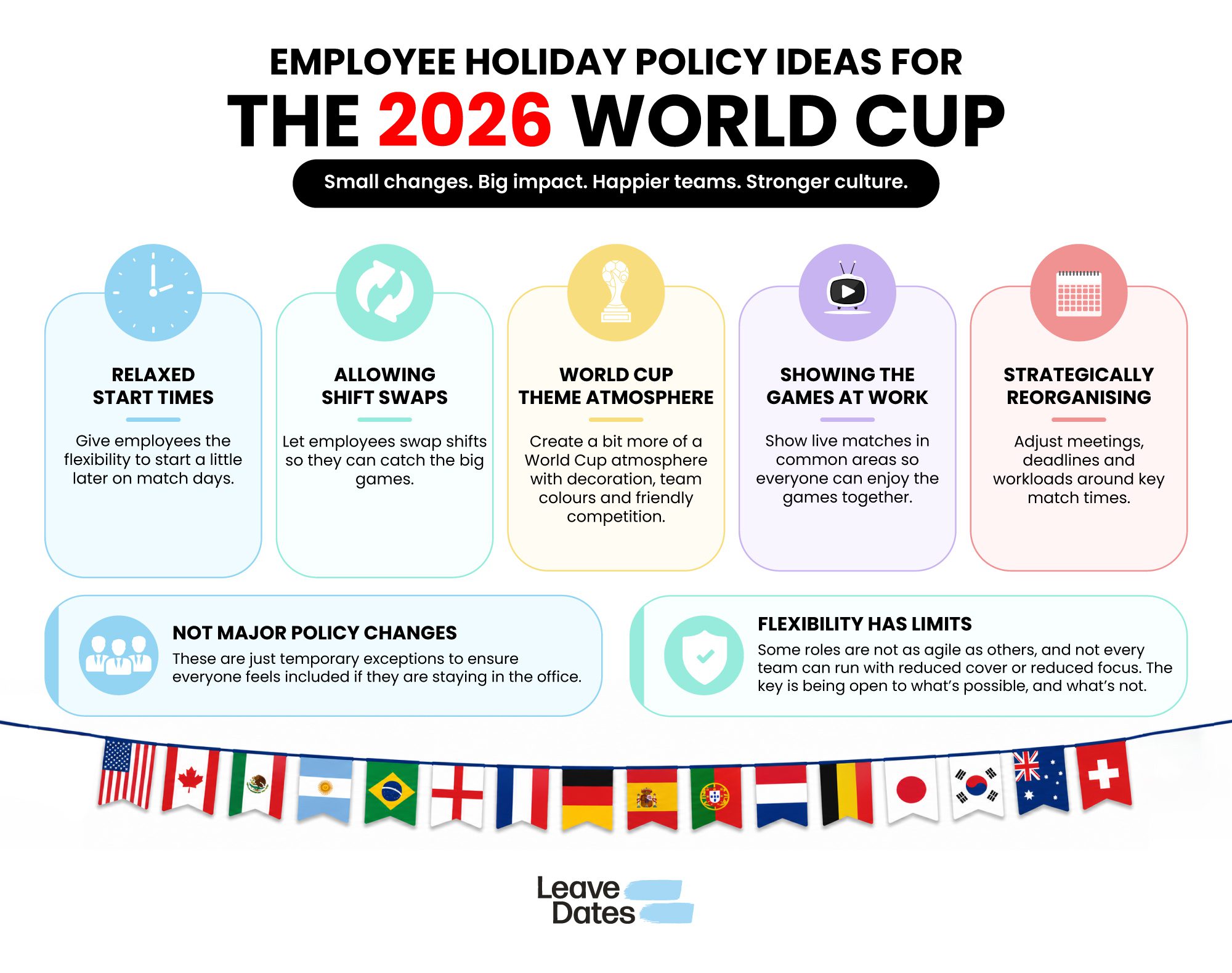
Some employers really get into the spirit of the World Cup, and lean into the moment. Allowing employees some leniency during big cultural events like this, especially when it's once every 4 years, will help increase employee loyalty, boost retention, and may even increase productivity, especially if they're in a good mood.
Allowing lenience could mean:
- ⏰ Relaxed start times
- 🔄 Allowing shift swaps
- ⚽ Creating a bit more of a World Cup-themed atmosphere for your team
- 📺 Showing the games at work
- 📅 Strategically reorganising client meetings, deadlines, and other obligations
These are not major policy changes; they are just temporary exceptions to ensure everyone feels included if they are staying in the office.
Of course, flexibility has limits. Some roles are not as agile as others, and not every team can run with reduced cover or reduced focus. The key is being open to what’s possible, and what’s not.
The late-night reality
The disruption to your business during the day may be minimal, but the late nights are a challenge.
There’s no argument that a 2 am kickoff for Scotland vs Haiti will have consequences the next day. Low energy, slow starts, productivity dips go with the territory.
Ignoring this won’t work. It’s best to be realistic and practical, find the solution that works best for your team overall to avoid losing control of the entire workday.
Keeping things fair
Flexibility paired with fairness is a morale booster. Not everyone is interested in the World Cup, or Football, and not everyone is able to work flexibly due to their role or other circumstances. Nobody wants to feel that they are picking up the slack while others get extra freedom; this is why consistency matters.
Whichever approach you take, it needs to be applied evenly to everyone, and workloads should be balanced across the team.
Communicate your World Cup leave policy early
Uncertainty stemming from poor communication is more likely to cause issues in the workplace than the event itself. As mentioned earlier, a short message that sets clear expectations early will make everything run more smoothly during the World Cup. Outline how leave will be handled and the flexibility available, including attendance expectations.
Your message doesn’t need to be overly formal or complex, just clear enough that your team can proceed with their plans and feel informed.
How leave management software helps during the World Cup
A shared leave calendar gives everyone visibility over who has already requested time off and when. This helps create a fairer system for popular events like the World Cup.
For example, if James was approved to take time off to watch one big match, Tom can be given priority for the next one, helping managers share opportunities fairly while ensuring the business stays adequately staffed.
Take the stress out of major events.
Leave Dates helps you manage annual leave fairly with a shared team calendar, simple approval workflows, and complete visibility over who’s off and when.
Keep your business running smoothly while giving your team the flexibility to enjoy the moments that matter.
Start your 30-day free trial today!
World Cup leave management checklist for employers
| Action | |
|---|---|
| Yes | Communicate your World Cup leave policy early. |
| Yes | Make sure everyone knows how to request annual leave. |
| Yes | Apply approvals consistently and fairly. |
| Yes | Encourage employees to book time off in advance. |
| Yes | Use a shared leave calendar to avoid clashes. |
| Yes | Remind staff that normal sickness absence rules still apply. |
A chance to plan ahead and get it right
The World Cup can either disrupt your workplace or bring it together.
Last-minute absences, unclear or inconsistent decisions, and a frustrated team could be the result if the event is handled poorly. However, handled well, your team can have a shared experience that boosts morale, and it all comes down to preparation.
Be clear. Be fair. Be flexible where it makes sense. As long as that’s done, when that first whistle blows, your business won’t grind to a halt, it’ll just adapt for a short time.
Managing leave during the World Cup doesn’t have to feel like a tournament of its own. With a clear employee holiday policy, fair processes, and a great leave management system, UK employers can maintain happy teams and not lose control of staffing during the big event.
FAQs
Yes. There are circumstances where UK employers can refuse annual leave requests if they give the required notice and apply their leave policy fairly, consistently, and within the law.
No. A hangover, on its own, is generally not considered a valid reason for sickness absence, and employees should follow the normal sickness reporting procedure if they are genuinely unwell.
A clear leave policy, early communication, and a shared leave calendar help managers approve requests consistently while maintaining adequate staffing levels.


